Hospital Pharmacy: A Complete Guide

This guide is published by the IJCPM Editorial Team for informational and professional guidance. It is an educational publication, not an academic peer-reviewed research paper, and carries no DOI. To explore peer-reviewed studies with registered Crossref DOIs, please visit our Research Articles.

Hospital pharmacy is the branch of pharmacy practice that supports patients during hospital care. It covers everything from checking a prescription on admission to counselling a patient before discharge, and it touches almost every ward, clinic, and treatment area in a hospital. This complete guide explains what hospital pharmacy is, what hospital pharmacists do day to day, how it differs from community pharmacy, and why it matters for safe, effective care.
What is hospital pharmacy?
Hospital pharmacy is pharmacy practice within a hospital setting, where pharmacists work as part of the clinical team caring for inpatients and, in many hospitals, outpatients as well. Unlike a retail setting, where the main contact may be at a counter, hospital pharmacists are often based on wards, in dispensaries, or in specialist departments. They see patients at different stages of care, review complex prescriptions, and help the wider team make medicines decisions in real time.
A hospital pharmacy journal will often cover the same themes as this guide: medication safety, formulary management, ward-based practice, and the pharmacist’s role in multidisciplinary care. Whether you call it hospital pharmacy, a hospital pharmacy journal topic, or use the search phrase journal hospital pharmacy, the core idea is the same: pharmacists helping hospital teams use medicines safely and well.
The hospital pharmacist’s roles
Hospital pharmacists do much more than dispense medicines. Their work spans supply, clinical review, education, and safety, and the balance changes from day to day depending on the ward and the patients in their care.

Dispensing
Dispensing remains a foundation of hospital pharmacy. Hospital dispensaries supply medicines for wards, clinics, and specialist units, often including medicines that need special handling, storage, or preparation. Pharmacists check prescriptions for accuracy, dose, and suitability before supply, and they make sure the right medicine reaches the right patient at the right time. In many hospitals, dispensing also includes preparing sterile products and supporting controlled, high-risk medicines with extra checks.
Ward rounds
On ward rounds, pharmacists work alongside doctors, nurses, and other health professionals to review patients’ treatment plans. They may take a medicines history, check whether regular medicines have been continued correctly, suggest dose adjustments as a patient’s condition changes, and flag possible interactions or side effects. Being present on the ward means problems can be discussed and resolved quickly, rather than waiting for a prescription to be questioned later.
Formulary management
Formulary management is the process of deciding which medicines a hospital stocks and uses, and keeping that list current. Pharmacists contribute evidence about effectiveness, safety, and cost, help develop local guidelines, and support committees that review new medicines. A well-managed formulary helps prescribers choose treatments consistently, reduces waste, and makes it easier for staff to know which medicines are available and how they should be used.
Medication safety
Medication safety runs through all hospital pharmacy work. Pharmacists check high-risk prescriptions, monitor for adverse effects, and support systems that reduce errors, such as clear prescribing, safe storage, and careful handover between teams. They also learn from incidents and near misses, helping hospitals improve processes so that the same problem is less likely to happen again. This safety focus is especially important when patients are acutely unwell, receiving several medicines, or moving between departments.
Patient counselling
Patient counselling in hospital pharmacy often happens at key moments: when a new medicine starts, when a dose changes, and before discharge. Pharmacists explain what a medicine is for, how to take it, what side effects to watch for, and what to do if a dose is missed. They also check understanding, because a patient who leaves hospital unsure about their medicines is more likely to run into problems at home. Good counselling links hospital care to the next stage of treatment, whether that is community pharmacy, primary care, or follow-up in clinic.
How hospital pharmacy differs from community pharmacy
Hospital pharmacy and community pharmacy share the same goal — safe and effective medicine use — but they work in different contexts. Community pharmacists are often the first and most accessible point of contact, supporting people over long periods, often in their local area. Hospital pharmacists, by contrast, usually work with patients during acute illness, surgery, or intensive treatment, when regimens can change quickly and monitoring is close.
Hospital practice also involves more direct teamwork on wards and in specialist clinics, and more involvement in complex areas such as intravenous therapy, critical care, oncology, and transplant care. Community practice, meanwhile, offers continuity after discharge and in everyday life, helping people manage long-term conditions, stay adherent, and know when to seek further advice. The two settings work best when information flows between them: hospital teams share discharge changes, and community teams flag concerns that arise at home.
For a closer look at the patient-centred services that run across both settings, see our guide to clinical pharmacy services, which explains medication review, therapy management, and counselling in more detail.
Hospital pharmacy across the patient journey
A hospital stay usually involves several pharmacy touchpoints. On admission, a pharmacist may reconcile medicines, comparing what a patient was taking before admission with what is prescribed in hospital, so that nothing important is missed and nothing is duplicated. During the stay, prescriptions are reviewed as new results arrive and as treatment changes. At discharge, the pharmacist checks the final prescription, explains changes, and helps ensure that community and primary care teams receive clear information.
This journey matters because transitions of care are a common point where errors can occur. A medicine stopped in hospital may need restarting, a dose changed for acute illness may need reviewing later, and a new medicine may interact with a regular one. Hospital pharmacists help keep that thread visible, so that changes are intentional, documented, and understood by everyone involved, including the patient.
Why hospital pharmacy matters
Hospital pharmacy matters because hospitals care for people at their most vulnerable, often with complex conditions and many medicines at once. A dedicated pharmacy presence helps ensure that prescribing is checked, that patients are monitored, and that medicines information is shared clearly across teams. It also supports prescribers, who can draw on pharmacists’ specialist knowledge when choosing treatments, adjusting doses, or managing interactions.
Beyond individual patients, hospital pharmacy supports the hospital as a whole. Formulary and guideline work, safety initiatives, and education for staff and students all contribute to more consistent, safer care. When these systems work well, patients benefit from treatment that is not only clinically appropriate, but also explained, monitored, and followed up.
This guide is general information only. It describes how hospital pharmacy is commonly organised; it is not medical advice for any individual, and anyone with questions about their own medicines should speak with their own pharmacist or clinician.

Conducting Original Clinical Research?
Submit your empirical manuscript to International Journal of Clinical Pharmacy and Medicine. Benefit from rigorous double-blind peer review, Crossref DOI indexing, open-access distribution, and rapid editorial decisions.
 Guides
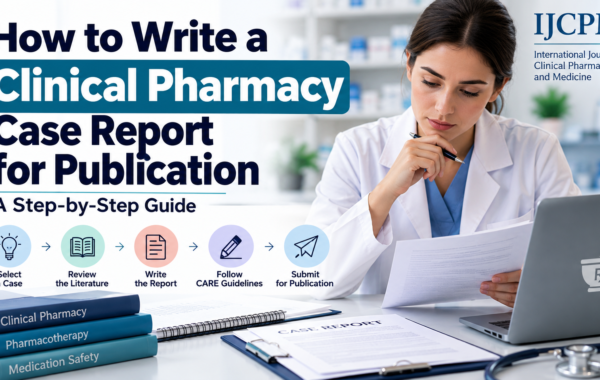
How to Write a Clinical Pharmacy Case Report for Publication: A Step-by-Step Guide by IJCPM
A practical guide for clinical pharmacists, pharmacy students, and healthcare researchers Clinical pharmacy case…
 Guides
How to Become a Clinical Pharmacist: A Complete Guide
If you enjoy science, patient care, and problem-solving, learning how to become a clinical…
 Guides
Clinical Pharmacy Journal: A Complete Guide
What Is a Clinical Pharmacy Journal? If you are a pharmacy student, a working…