How to Write a Clinical Pharmacy Case Report for Publication: A Step-by-Step Guide by IJCPM

This guide is published by the IJCPM Editorial Team for informational and professional guidance. It is an educational publication, not an academic peer-reviewed research paper, and carries no DOI. To explore peer-reviewed studies with registered Crossref DOIs, please visit our Research Articles.
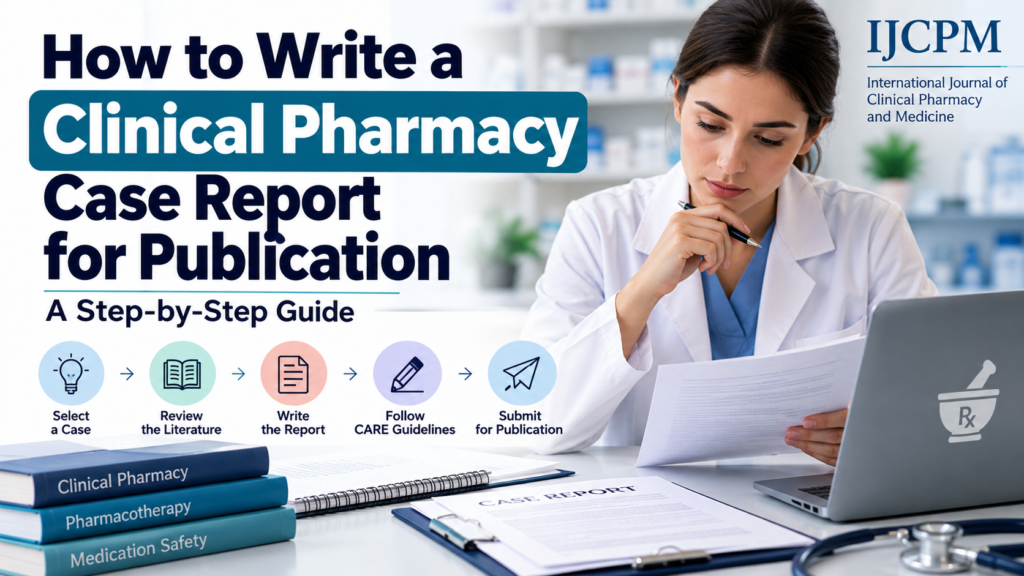
A practical guide for clinical pharmacists, pharmacy students, and healthcare researchers
Clinical pharmacy case reports play an important role in advancing evidence-based pharmacotherapy, identifying medication-related problems, and improving patient safety. They allow pharmacists to share clinically meaningful observations, unusual adverse drug reactions, complex therapeutic decisions, and successful pharmaceutical care interventions with the wider healthcare community.
However, writing a clinical pharmacy case report suitable for publication requires more than describing a patient’s medical history. A strong case report must demonstrate clinical relevance, scientific accuracy, appropriate documentation, and a clear educational message.
Whether you are a clinical pharmacist documenting a medication-related intervention, a pharmacy resident preparing your first manuscript, or a healthcare researcher seeking publication, this step-by-step guide explains how to write a clinical pharmacy case report for publication, from selecting a suitable case to preparing and submitting your manuscript.
The International Journal of Clinical Pharmacy and Medicine (IJCPM) supports the dissemination of clinical pharmacy knowledge, pharmacotherapy research, and practical clinical experiences that contribute to better patient care.
What Is a Clinical Pharmacy Case Report?
A clinical pharmacy case report is a scholarly description of an individual patient’s clinical condition, medication-related problems, therapeutic interventions, and outcomes, with particular emphasis on the role of pharmacotherapy.
Unlike conventional medical case reports, which may focus primarily on diagnosis and disease management, clinical pharmacy case reports highlight medication selection, dosing, monitoring, safety, effectiveness, and pharmaceutical care.
They may describe:
- Unusual or serious adverse drug reactions.
- Clinically significant drug–drug interactions.
- Complex antimicrobial treatment decisions.
- Medication dosing in renal or hepatic impairment.
- Therapeutic drug monitoring and dose optimization.
- Medication errors and interventions that prevented patient harm.
- Difficult anticoagulation management.
- Pharmacist-led medication optimization.
- Unusual treatment responses or medication-related complications.
For example, a clinical pharmacist may identify an unexpected adverse reaction to a commonly prescribed medication, recommend a therapeutic adjustment, monitor the patient’s response, and document a clinically meaningful outcome.
When appropriately investigated and reported, such experiences may help other healthcare professionals recognize similar problems and improve clinical decision-making.
Why Are Clinical Pharmacy Case Reports Important?
Clinical pharmacy case reports contribute to the medical literature in several ways.
1. Identifying medication safety concerns
Case reports can help identify previously unrecognized adverse drug reactions, unusual drug interactions, or medication-related complications.
Although an individual case cannot establish causality or determine the frequency of an adverse event, it may generate a hypothesis that warrants further investigation.
2. Demonstrating clinical pharmacy interventions
Clinical pharmacists regularly contribute to medication optimization, antimicrobial stewardship, therapeutic drug monitoring, and prevention of medication errors.
Case reports can document these interventions and explain their clinical significance.
3. Supporting clinical education
Well-written case reports are useful teaching resources for pharmacy students, residents, and practicing pharmacists.
They connect pharmacological knowledge with real-world clinical decision-making.
4. Generating research questions
Unusual clinical findings may reveal gaps in current pharmacotherapy evidence.
A published case report may encourage further investigation through observational studies, clinical trials, or systematic reviews.
For these reasons, clinical case reports remain a valuable component of scholarly communication in journals such as the International Journal of Clinical Pharmacy and Medicine.
Step 1: Select a Clinically Relevant Case
The first step is identifying a patient case that offers a meaningful contribution to clinical knowledge.
Not every successful medication intervention requires publication. A publishable case should provide a clear lesson that extends beyond routine practice.
Characteristics of a strong clinical pharmacy case report
A suitable case usually includes one or more of the following:
Novelty: An unusual medication-related complication, unexpected treatment response, or rarely reported drug interaction.
Clinical significance: A medication-related problem with meaningful implications for patient care or safety.
Educational value: A complex therapeutic decision that helps clinicians understand how to manage similar patients.
Adequate documentation: Sufficient clinical information, laboratory results, medication history, and follow-up to support a meaningful discussion.
Evidence-based interpretation: A logical relationship between the observations, existing medical literature, and the proposed clinical conclusions.
Examples of potential clinical pharmacy case report topics
| Clinical area | Potential case report |
|---|---|
| Infectious diseases | Therapeutic drug monitoring challenges during vancomycin treatment in severe renal dysfunction |
| Cardiology | Complex anticoagulation management in a patient with competing thrombotic and bleeding risks |
| Critical care | Suspected drug-induced thrombocytopenia in an intensive care patient |
| Oncology | Clinically significant toxicity associated with an anticancer medication |
| Neurology | Management of a suspected antiepileptic drug interaction |
| Nephrology | Medication accumulation and toxicity during acute kidney injury |
| Internal medicine | Recognition and management of severe electrolyte abnormalities associated with medication use |
The objective is not simply to describe an interesting patient, but to explain what other healthcare professionals can learn from the case.
Step 2: Conduct a Literature Review Before Writing
Before developing the manuscript, determine whether similar cases have already been reported.
A literature search helps establish the novelty and clinical importance of your observation.
Useful databases include:
- PubMed
- Google Scholar
- Cochrane Library
- Relevant specialty journals and clinical practice guidelines.
How to search for similar cases
Suppose you are preparing a case report involving a suspected interaction between warfarin and an antimicrobial.
Potential search phrases include:
- “Warfarin antibiotic interaction case report”
- “Warfarin elevated INR antimicrobial case”
- “Drug-induced bleeding warfarin case report”
- “Clinical pharmacist intervention warfarin interaction”
Review the available evidence and identify what makes your case different.
Ask:
- Has this medication-related problem been published previously?
- What clinical outcomes were reported?
- Does the current case involve an unusual population or treatment circumstance?
- Does your observation add new information about prevention, diagnosis, monitoring, or management?
- Could the case change how clinicians approach similar situations?
Novelty does not necessarily mean that the adverse reaction or intervention has never been reported.
A case may also contribute by demonstrating an unusual clinical presentation, a particularly complex therapeutic challenge, or an important medication safety lesson.
However, the manuscript should explain this contribution without overstating its originality.
Step 3: Follow the CARE Case Report Guidelines
One of the most important steps in preparing a publishable case report is following an established reporting framework.
The CARE (CAse REport) guidelines provide internationally recognized recommendations for transparent and complete reporting of clinical case reports.
The original CARE guideline was developed by Gagnier and colleagues and includes a 13-item reporting checklist.
The checklist addresses the essential elements of a case report, including patient information, clinical findings, timeline, interventions, outcomes, and informed consent.
Authors can access the official guidelines through the EQUATOR Network CARE reporting guidelines or download resources from the CARE Guidelines website.
Essential CARE guideline components
| Component | What to include |
|---|---|
| Title | The principal clinical issue or intervention and identification as a case report |
| Keywords | Relevant disease, medication, intervention, and case report terms |
| Abstract | Background, main findings, intervention, outcome, and conclusion |
| Introduction | Background and explanation of the case’s importance |
| Patient information | Relevant de-identified clinical and medication history |
| Clinical findings | Significant examination findings and clinical observations |
| Timeline | Chronological presentation of important events |
| Diagnostic assessment | Laboratory findings, investigations, and diagnostic reasoning |
| Therapeutic interventions | Medication regimens, dosage changes, and clinical decisions |
| Follow-up and outcomes | Clinical response, monitoring, and adverse events |
| Discussion | Interpretation, comparison with literature, and limitations |
| Patient perspective | Patient-reported experience when available |
| Informed consent | Documentation of consent according to applicable requirements |
Following CARE guidelines helps authors present their observations systematically and makes it easier for readers and reviewers to evaluate the reported case.
Importantly, CARE is a reporting guideline, not a substitute for scientific reasoning, ethical approval processes, or careful assessment of causality.
Step 4: Write a Clear and Searchable Title
The title is one of the first elements readers and journal editors encounter.
A good clinical pharmacy case report title should clearly identify the medication-related problem, clinical condition, or therapeutic intervention.
It should be specific, informative, and concise.
Examples of effective case report titles
Example 1: Adverse drug reaction
“Suspected Cefepime-Induced Neurotoxicity in a Patient With Renal Impairment: A Case Report”
Example 2: Drug interaction
“Severe INR Elevation During Concomitant Warfarin and Antimicrobial Therapy: A Case Report”
Example 3: Therapeutic drug monitoring
“Challenges in Vancomycin Therapeutic Drug Monitoring During Acute Kidney Injury: A Case Report”
Example 4: Clinical pharmacy intervention
“Pharmacist-Led Optimization of Anticoagulation in a Patient With Complex Comorbidities: A Case Report”
Avoid titles such as “An Interesting Clinical Case” or “A Rare Patient Presentation” because they do not adequately communicate the topic.
Including relevant clinical terms can also help readers discover your article through scholarly databases and search engines.
Step 5: Write a Structured Abstract
The abstract should summarize the central clinical issue and the contribution of the case report.
Although requirements vary between journals, an abstract of approximately 150–250 words is a practical starting point when no journal-specific limit has been provided.
A useful structure includes four components.
Background
Explain why the case is clinically relevant.
Case presentation
Summarize the patient’s presentation, medication exposure, important clinical findings, and relevant investigations.
Intervention and outcome
Describe the medication-related intervention and the observed clinical response.
Conclusion
State the main educational message without making conclusions beyond the available evidence.
Example of a clinical pharmacy case report abstract
The following is a fictional educational example, not a real patient report.
Background: Cefepime-associated neurotoxicity is a recognized medication safety concern, particularly in patients with impaired renal function.
Case presentation: A 72-year-old hospitalized patient receiving intravenous cefepime for a suspected bacterial infection developed new confusion and myoclonus following deterioration in renal function. Medication review identified potential cefepime accumulation because the prescribed regimen had not been adjusted to the patient’s current renal function.
Intervention and outcome: The clinical pharmacist recommended reassessment of cefepime therapy, renal dose adjustment, and evaluation of alternative causes of neurological deterioration. Cefepime was subsequently discontinued, and neurological symptoms improved during follow-up.
Conclusion: This illustrative case highlights the importance of renal function monitoring, timely antimicrobial dose adjustment, and medication review when evaluating new neurological symptoms during cefepime therapy.
This example demonstrates how to communicate the clinical problem, pharmacotherapy issue, intervention, and observed outcome in a concise format.
Step 6: Describe the Patient and Clinical Presentation
The case presentation forms the core of the manuscript.
It should provide sufficient detail for readers to understand the patient’s clinical situation and the decisions made during treatment.
Patient demographics and medical history
Include clinically relevant information such as:
- Age and sex, when relevant.
- Presenting complaint and symptoms.
- Relevant medical conditions.
- Medication history.
- Drug allergies.
- Renal and hepatic function.
- Previous hospitalizations or treatment failures, when relevant.
- Other factors affecting medication selection or response.
Avoid including unnecessary identifying information.
Medication history
For clinical pharmacy case reports, the medication history deserves particular attention.
Whenever possible, provide the medication name, dose, route, frequency, treatment duration, and indication.
For example:
| Medication | Dose | Route | Indication |
|---|---|---|---|
| Cefepime | 2 g every 12 hours | IV | Suspected bacterial infection |
| Metoprolol | 50 mg twice daily | Oral | Hypertension |
| Apixaban | 5 mg twice daily | Oral | Atrial fibrillation |
Fictional medication list for illustrative purposes only.
Medication details are essential when evaluating suspected adverse reactions, drug interactions, dosing errors, and treatment failures.
Laboratory and diagnostic findings
Include investigations directly relevant to the medication-related problem.
Examples include serum creatinine, estimated glomerular filtration rate, electrolytes, liver enzymes, complete blood count, coagulation parameters, drug concentrations, microbiological results, or diagnostic imaging.
Where appropriate, report both baseline and follow-up results, together with units and reference intervals.
For medication dosing decisions, explain which renal function estimate was used and why.
Step 7: Present a Chronological Clinical Timeline
A chronological timeline helps readers understand how the patient’s condition changed in relation to medication exposure and clinical interventions.
It is particularly useful for adverse drug reactions, therapeutic drug monitoring, and medication optimization.
Example of a clinical case report timeline
| Day | Clinical event | Medication-related observation |
|---|---|---|
| Day 1 | Patient admitted with suspected bacterial infection | Cefepime initiated |
| Day 3 | Renal function deteriorated | Potential need for dose reassessment |
| Day 4 | New confusion and myoclonus observed | Possible medication-associated neurotoxicity considered |
| Day 4 | Medication review completed | Pharmacist recommended reassessment of cefepime |
| Day 5 | Antibiotic regimen modified | Neurological status monitored |
| Day 7 | Neurological symptoms improved | Temporal relationship documented |
This timeline is fictional and illustrates reporting format only.
A timeline should show important clinical events without introducing unnecessary information.
It must reflect the actual sequence of documented events in any real case report.
Step 8: Clearly Explain the Drug-Related Problem
This step is particularly important in a clinical pharmacy case report.
Readers should be able to identify the precise medication-related issue and understand why it required intervention.
Common drug-related problems include:
- Inappropriate drug selection.
- Excessive or insufficient medication dose.
- Untreated medical indication.
- Adverse drug reaction.
- Drug–drug interaction.
- Treatment failure.
- Inappropriate duration of therapy.
- Failure to monitor medication safety or effectiveness.
- Medication nonadherence.
- Medication administration errors.
Example: Identifying a medication-related problem
Clinical issue: A hospitalized patient developed neurological symptoms while receiving cefepime during worsening renal function.
Potential drug-related problem: Accumulation of cefepime due to insufficient dose adjustment in renal impairment.
Clinical pharmacist assessment: The pharmacist reviewed renal function trends, medication administration records, antimicrobial indication, treatment duration, and alternative explanations for neurological deterioration.
Recommended intervention: Reassess the antimicrobial regimen, consider discontinuation or appropriate dose adjustment, and coordinate further neurological evaluation.
Observed outcome: Neurological symptoms improved after the treatment regimen was changed.
This structure allows the reader to distinguish the patient’s presenting condition from the medication-related problem and the pharmacist’s contribution.
For suspected adverse drug reactions, authors should also consider structured causality assessment methods when appropriate and acknowledge competing explanations.
Temporal association alone does not prove that a medication caused the observed event.
Step 9: Describe the Pharmacist’s Intervention and Clinical Outcome
A successful clinical pharmacy case report should clearly explain what happened after the medication-related problem was identified.
Describe the intervention in enough detail to demonstrate its clinical reasoning and practical significance.
Relevant information may include:
Intervention: What medication change was recommended or implemented?
Rationale: Which pharmacological principles, clinical findings, or published recommendations supported the decision?
Monitoring: Which clinical or laboratory parameters were followed?
Response: What changes occurred after the intervention?
Follow-up: Was the response sustained? Did adverse effects occur? Was the patient readmitted?
It is important to distinguish between a pharmacist’s recommendation and a treatment decision actually implemented by the healthcare team.
For example, stating that a pharmacist recommended discontinuation of a suspected causative drug is different from stating that the pharmacist independently discontinued it.
Report objective outcomes whenever possible
Examples include:
- Improvement in renal function.
- Reduction in medication-related toxicity.
- Achievement of a therapeutic drug concentration.
- Resolution of an adverse reaction.
- Improved blood glucose control.
- Stabilization of anticoagulation parameters.
- Successful transition to an appropriate medication regimen.
If follow-up is incomplete, state this clearly rather than assuming that an intervention was successful.
Step 10: Write a Strong Discussion Section
The discussion is often the most intellectually important section of a clinical case report.
It should explain what the case contributes to the existing literature.
A strong discussion should answer four questions.
What makes this case clinically important?
Explain the medication-related issue and its relevance to patient safety or therapeutic decision-making.
How does the case compare with previously published reports?
Discuss similar cases, established pharmacological mechanisms, and relevant clinical evidence.
Highlight meaningful differences without claiming novelty that the literature does not support.
What is the most plausible explanation for the findings?
Explain the clinical and pharmacological reasoning.
For example, in suspected cefepime-associated neurotoxicity, discussion may address impaired renal clearance, drug accumulation, neurological manifestations, and alternative causes of encephalopathy.
What are the limitations?
Case reports are inherently limited by their observational nature.
Common limitations include incomplete follow-up, the presence of competing explanations, unavailable drug concentrations, and inability to demonstrate definitive causality.
A case report should not claim that an intervention is superior to another treatment or that a medication routinely causes a particular outcome based on a single patient.
The strongest discussion sections balance clinical interpretation with scientific caution.
Step 11: Address Patient Consent and Publication Ethics
Patient confidentiality and publication ethics are essential components of clinical case reporting.
Authors should consult the current International Committee of Medical Journal Editors (ICMJE) Recommendations and the selected journal’s requirements.
Patient consent
Written informed consent for publication is required when a patient may be identifiable, and individual journals may have additional consent requirements even for de-identified cases.
Consent to clinical treatment is not the same as consent to publish a patient’s medical information.
Depending on the circumstances, permission may need to be obtained from an appropriate parent, guardian, or authorized representative.
Patient confidentiality
Remove or appropriately protect identifying information, including names, medical record numbers, addresses, and unnecessary identifying dates.
Photographs, images, or unusual clinical details may create a risk of identification even when names are omitted.
Do not fabricate or alter clinical findings merely to disguise a patient’s identity.
Institutional and ethical requirements
Authors should determine whether institutional review board approval, exemption, institutional permission, or another form of review is required under local policy.
A single-patient case report does not automatically require research ethics committee approval in every jurisdiction, but this should never be assumed without checking applicable requirements.
Authorship and disclosure
All listed authors should satisfy applicable authorship criteria.
Contributors should disclose relevant conflicts of interest, funding, and any use of artificial intelligence tools according to journal policy.
The ICMJE recommendations provide guidance on authorship, disclosure, publication ethics, and responsible scientific reporting.
Step 12: Select a Suitable Clinical Pharmacy Journal
Choosing an appropriate journal is an important part of the publication process.
The journal should have a scope consistent with the clinical significance and educational focus of the manuscript.
Before submitting, evaluate:
- Whether the journal accepts case reports.
- Relevance to clinical pharmacy, pharmacotherapy, and medication safety.
- Author instructions and manuscript formatting requirements.
- Editorial and peer-review policies.
- Publication fees, if applicable.
- Indexing and discoverability.
- Publication ethics policies.
Publishing clinical pharmacy research in IJCPM
The International Journal of Clinical Pharmacy and Medicine (IJCPM) is a peer-reviewed, open-access journal focused on clinical pharmacy, pharmacotherapy, hospital pharmacy, medication safety, and related healthcare research.
Its stated publication scope includes case reports alongside original research and review articles.
Clinical pharmacy case reports concerning medication-related problems, therapeutic interventions, drug safety, and patient-centered pharmacotherapy are therefore relevant topics to consider in relation to the journal’s scope.
Authors interested in publication should visit the official IJCPM website to review current journal information, available author instructions, and submission procedures.
Acceptance depends on editorial assessment, scientific quality, ethical compliance, and the journal’s current publication policies.
Step 13: Prepare the Manuscript for Journal Submission
Before submission, confirm that the manuscript complies with the selected journal’s requirements.
Pay particular attention to word limits, reference style, tables, figures, author information, and supplementary documents.
Final clinical pharmacy case report checklist
- The case presents a clear clinical or educational contribution.
- A relevant literature search has been conducted.
- The manuscript follows the CARE reporting guidelines.
- The title accurately identifies the central clinical issue.
- The abstract summarizes the problem, intervention, and outcome.
- Important medical and medication histories are documented.
- Drug names, doses, routes, and treatment durations are accurate.
- Relevant laboratory and diagnostic findings are included.
- The chronological timeline is clear.
- The drug-related problem is explicitly identified.
- The pharmacist’s contribution is accurately described.
- Clinical outcomes and follow-up are reported.
- The discussion compares the case with existing literature.
- Limitations and alternative explanations are acknowledged.
- Patient consent and confidentiality requirements are satisfied.
- References are accurate and appropriately cited.
- Authorship and conflict-of-interest disclosures are complete.
- Journal-specific submission instructions have been followed.
Common Mistakes That Lead to Clinical Case Report Rejection
Even clinically interesting case reports may be rejected because of weaknesses in their presentation.
1. Lack of a clear educational message
A case should explain why the observation matters and what clinicians can learn from it.
2. Insufficient medication-related information
Omitting drug doses, treatment duration, renal function, or medication changes can prevent readers from evaluating the case.
3. Overstating causality
A suspected adverse drug reaction should not automatically be described as proven.
Authors should consider alternative explanations and use appropriately cautious terminology.
4. Weak discussion of the literature
A discussion that merely repeats the case presentation offers limited scientific value.
The manuscript should compare the observation with published evidence.
5. Incomplete clinical outcomes
A case report becomes less informative when it describes an intervention without documenting what happened afterward.
6. Failure to address patient consent
Patient privacy and consent requirements must be resolved before publication.
7. Poor manuscript organization
Using a recognized reporting framework such as CARE helps reduce omissions and improve transparency.
Frequently Asked Questions About Clinical Pharmacy Case Reports
Can a clinical pharmacist publish a case report?
Yes. Clinical pharmacists can author and publish case reports when they have made an appropriate scholarly contribution and satisfy the journal’s authorship criteria. Multidisciplinary co-authorship may be appropriate when several healthcare professionals contributed to the patient’s care and the manuscript.
Can a pharmacy student write a clinical case report?
Yes. Pharmacy students may participate in case report writing under appropriate supervision. Students must observe patient confidentiality, institutional policies, and publication ethics requirements.
How long should a clinical pharmacy case report be?
There is no universal word limit. Many journals publish concise case reports, but permissible length varies considerably. Authors should follow the selected journal’s current instructions rather than relying on a fixed word count.
Does a clinical case report require patient consent?
Publication consent requirements depend on patient identifiability, applicable regulations, and journal policy. Written informed consent is essential when identifiable patient information is involved. Journals may require written consent more broadly.
Can a medication error be published as a case report?
Yes, when the medication error presents a meaningful clinical or medication-safety lesson and its publication complies with confidentiality and institutional requirements. Reports should focus on contributing factors, intervention, outcome, and prevention rather than assigning individual blame.
What is the difference between a clinical pharmacy case report and a research article?
A case report describes and interprets one patient or a small number of closely related cases. An original research article generally uses a defined research design to investigate a question across a specified population or dataset. Case reports can generate hypotheses but usually cannot establish treatment efficacy or comparative effectiveness.
Can an adverse drug reaction be published as a case report?
Yes. Unusual, serious, or clinically informative adverse drug reactions are common case report topics. Authors should document the medication exposure, clinical findings, timing, alternative explanations, management, and outcome.
How do I improve the chances of getting my case report published?
Select a clinically relevant case, conduct a thorough literature review, follow CARE guidelines, document the pharmacotherapy accurately, explain the educational contribution, and comply with the selected journal’s ethical and editorial requirements.
Where can I publish a clinical pharmacy case report?
Clinical pharmacy case reports may be considered by pharmacy, pharmacotherapy, hospital pharmacy, medication safety, or specialty medical journals that accept this article type.
One journal whose stated scope includes clinical pharmacy case reports is the International Journal of Clinical Pharmacy and Medicine (IJCPM). Authors should review its current submission information before preparing a manuscript.
Conclusion
Writing a high-quality clinical pharmacy case report requires careful case selection, accurate medication documentation, critical evaluation of the available literature, and transparent reporting of the pharmacist’s contribution.
The most valuable case reports do more than describe an unusual clinical event. They explain a medication-related problem, demonstrate the reasoning behind a therapeutic intervention, document the patient outcome, and communicate an important lesson for future clinical practice.
By following the CARE reporting guidelines, protecting patient confidentiality, and presenting findings objectively, clinical pharmacists and pharmacy students can transform meaningful clinical observations into scholarly publications.
For healthcare professionals interested in clinical pharmacy research, pharmacotherapy, medication safety, and case report publication, the International Journal of Clinical Pharmacy and Medicine (IJCPM) provides a relevant scholarly publication venue to explore.
Explore IJCPM: International Journal of Clinical Pharmacy and Medicine — Official Website
References and Further Reading
- Gagnier JJ, Kienle G, Altman DG, Moher D, Sox H, Riley D; CARE Group. The CARE guidelines: consensus-based clinical case report guideline development. Journal of Clinical Epidemiology. 2014;67(1):46–51. https://doi.org/10.1016/j.jclinepi.2013.08.003
- EQUATOR Network. CARE Guidelines: Consensus-based Clinical Case Reporting Guideline Development. https://www.equator-network.org/reporting-guidelines/care/
- CARE Case Report Guidelines. CARE Checklist and Author Resources. https://www.care-statement.org/downloads
- International Committee of Medical Journal Editors. Recommendations for the Conduct, Reporting, Editing, and Publication of Scholarly Work in Medical Journals. https://www.icmje.org/recommendations/
- International Journal of Clinical Pharmacy and Medicine (IJCPM). Official Journal Website. https://ijcpm.com/
Published by the International Journal of Clinical Pharmacy and Medicine (IJCPM). This educational article provides general guidance for clinical case report preparation and does not replace the author instructions, institutional policies, or ethics requirements of individual journals.

Conducting Original Clinical Research?
Submit your empirical manuscript to International Journal of Clinical Pharmacy and Medicine. Benefit from rigorous double-blind peer review, Crossref DOI indexing, open-access distribution, and rapid editorial decisions.
 Guides
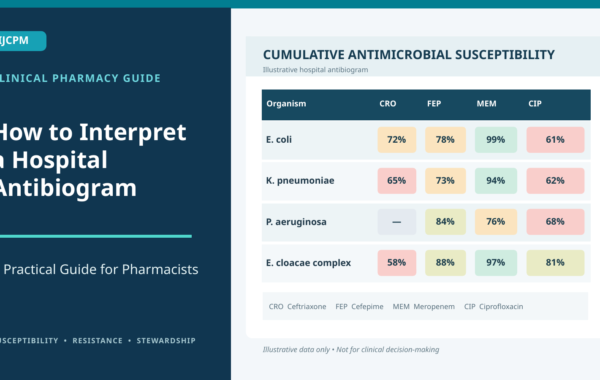
How to Interpret a Hospital Antibiogram: A Practical Guide for Pharmacists by The International Journal of Clinical Pharmacy and Medicine
A step-by-step guide to antimicrobial susceptibility data, empirical antibiotic selection, and antimicrobial stewardship Introduction…